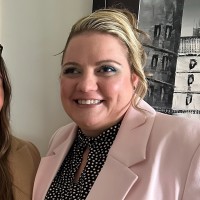

Social justice isn’t theoretical for Mob with disability. It isn’t a slogan for posters or a theme for a single day of the year. It is the ground we walk on — uneven, unpredictable, and too often shaped by systems that were never designed with us in mind. As a proud Darug woman who is also totally blind, and now Australia’s first blind Aboriginal lawyer, I’ve lived at the intersection of two worlds: disability and justice. And what I’ve learned is simple — when a system isn’t built for you, you don’t wait for permission. You build your own entrance.
My journey into law started long before textbooks, degrees, or the courtroom. It began in community. Working at a Community Legal Centre, I saw how quickly things changed when people felt heard, respected, and supported. Advocacy wasn’t just paperwork — it was power. It was safety. It was dignity. That experience lit something inside me. I didn’t want to just help people navigate the system; I wanted to change the way the system treats our people.
But becoming a lawyer as a blind Aboriginal woman meant stepping into institutions that historically excluded both parts of my identity. I lost my vision to cone-rod dystrophy during my criminology degree — suddenly, every textbook, lecture, and assessment existed in formats I couldn’t access. My entire law degree had to be completed through sound: hours and hours of audio notes, converted textbooks, and screen reader software that didn’t always behave.
Those challenges weren’t inspirational; they revealed deep cracks in accessibility that people with disability are expected to quietly work around. The justice system loves to talk about fairness, but fairness means nothing if access isn’t equal. And access is not equal when disabled people must fight twice as hard to study, qualify, and practice in professions that desperately need our voices.
But here’s what those barriers taught me:
Disability doesn’t weaken justice work. It strengthens it.
When an Aboriginal client sits in front of me and says, “I can’t read or write,” I can meet them without judgment. I can say, “Neither can I — but we’ll get around this together.” That single line removes shame. It shifts the power. It creates trust — something our people rarely feel inside courtrooms.
Social justice lives in those small moments.
It lives in how I slow things down for clients so they understand what’s happening, because too often, legal processes move at a speed that leaves Aboriginal people confused, overwhelmed, or scared.
It lives in how I use humour — a quick joke about my cane or missing the chair — to calm a young fella before court, because when you’re anxious, even a moment of shared laughter can steady your feet.
It lives in the way I listen — deeply, attentively, without assumptions — because I know what it feels like not to be listened to.
Above all, social justice lives in representation.
Seeing someone who looks like you — who comes from community, who shares culture, who understands disability from the inside — changes everything. It breaks stereotypes before you even open your mouth.
When I stood in the Supreme Court of NSW to be admitted as a lawyer, I didn’t feel like a symbol or a “first.” I felt like every ancestor who carried me was standing there too. I felt the weight of all the people who were told they couldn’t — and the responsibility to make sure they know they can.
My work now is not just about individual cases. It’s about dismantling systemic barriers, shaping policy, and making sure that justice doesn’t depend on sight, literacy, privilege, or proximity to power. It’s about ensuring Mob with disability don’t just enter the system — they transform it.
My hope for this World Day of Social Justice is that more disabled Mob step into the spaces where decisions are made. That our lived experience stops being treated as “inspiration” and starts being treated as expertise. That systems stop expecting us to adapt to them — and start adapting to us.
Because justice was never built for us.
But we’re building it anyway — and we’re not building it alone.